
This Time is Different

If SpaceX Grows like Amazon
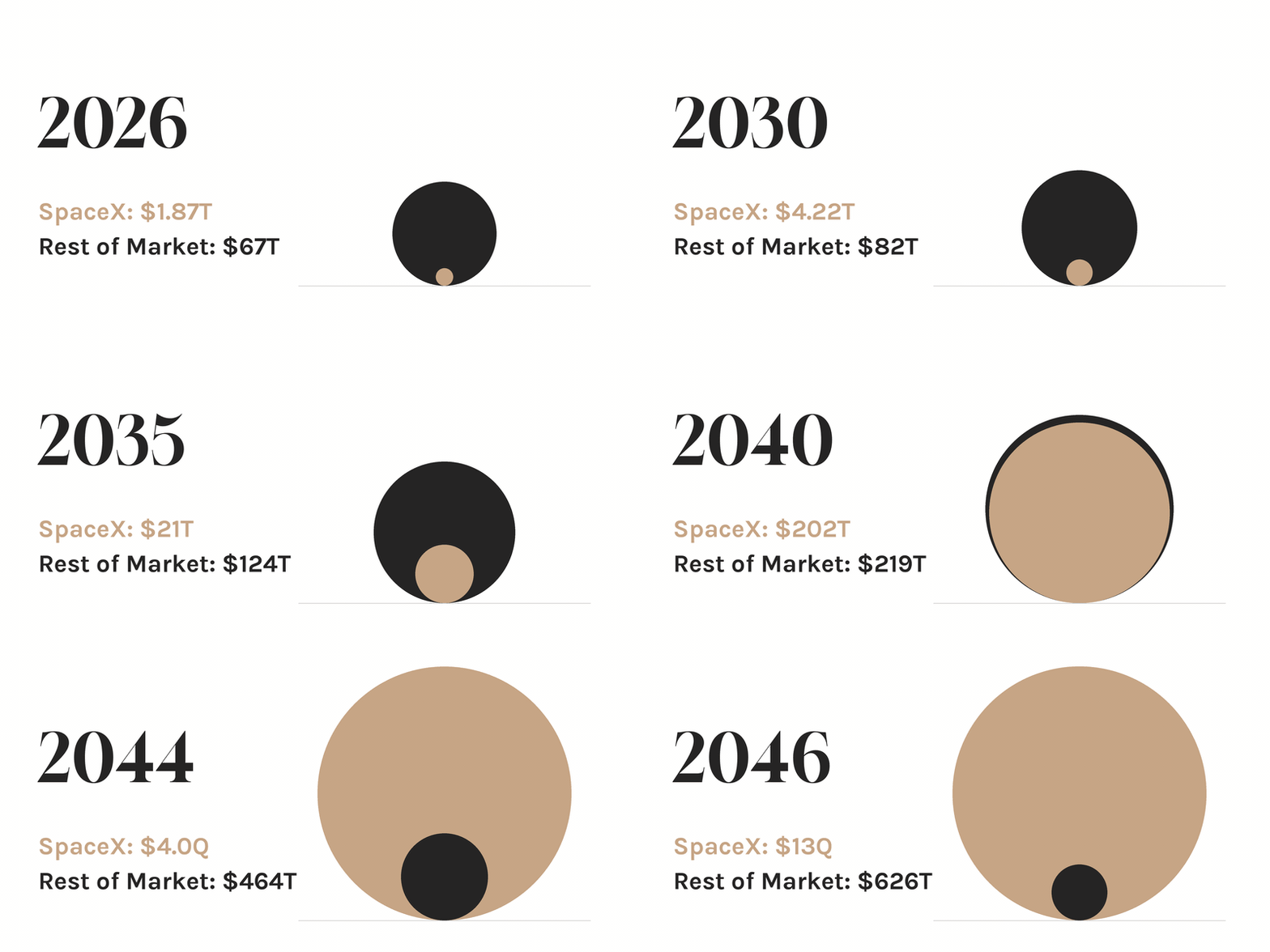
The most dangerous sentence in finance is “This time is different.” We ignore history at our peril. Boom-and-bust cycles are a product of human nature itself. But sometimes a little math will identify clear differences between then and now.
You may remember the tech bubble of the 1990s and the crash that followed. Celebrated high-flyers crashed to Earth: Enron wiped out $65B in shareholder wealth from its peak, and WorldCom burned $175B—when a billion dollars was real money!
Other stocks made investors wealthy beyond their dreams: From its initial public offering in 1997, Amazon stock has compounded at nearly 32% annually. A $1,000 investment has soared to over $3M today (despite a tumble of nearly 95% early in its journey).
What does the math say this time? Amazon went public at a valuation of $300M in 1997 and closed at $438M on its first day. For a company launching at a $1.8T valuation to follow the same trajectory, it would rapidly eclipse the entire market!
Investors hoping for a moonshot should ask: Can SpaceX or other exceptional companies (like OpenAI and Anthropic) deliver Amazon-like returns after they come to market? Today, companies are staying private longer and going public after early (private) investors have captured the lion’s share of the value.
For public market investors hoping for life-changing wealth, the math of Amazon's flight doesn't math anymore. It seems safe to say "this time is different."

Disclaimer: The opinions voiced and information provided in this document is for informational and educational purposes only. It should not be considered investment, financial, or legal advice. Nothing herein constitutes a recommendation to buy, sell, or hold any security or financial instrument. Magnolia Private Wealth does not provide tax, legal or accounting advice. Investing involves risk, including the potential loss of principal. You should consult with a qualified financial advisor, tax professional, or other appropriate professional before making any financial decisions. The author and publisher assume no liability for any losses or damages resulting from the use of this information.
Insights from Our Team.